

Embarking on the journey to become a data scientist can be both exciting and challenging. For working professionals seeking the best data science course, Data Science Academy offers a comprehensive roadmap. Their data science certification course online is tailored to accommodate busy schedules, making it the ideal choice for those balancing work commitments. With a focus on practical learning, this course equips individuals with the skills needed to thrive in the data science industry.
Data Science Academy stands out as one of the best online institutes for data science, providing top-notch data science online training. The program covers a range of topics, from data science fundamentals to machine learning, ensuring that learners build a strong foundation. Moreover, the inclusion of placement assistance ensures that graduates are well-prepared to step into the world of data science.
Whether you’re starting from scratch or looking to enhance your existing knowledge, Data Science Academy’s data science online course with a certificate offers a structured learning path. This distance learning data science program is designed to cater to diverse needs, making it the best institute to learn data science. Join the ranks of successful data scientists by enrolling in one of the best online data science courses today. Your journey to mastering data science begins here.

Why Become a Data Scientist in India?
Data Scientists are in demand worldwide and in industries, and India is not an exception. Based on a survey by Monster jobs, 96% of the companies in India are looking to hire professionals to fill Big Data Analytics roles by 2023. This demand is expected to grow as we are set to generate more and more data with the arrival of the Internet of Things (IoT), and businesses become more reliant on valuable insights derived from this data for their success and growth.
Also, Data Scientists are one of the highest paid professionals across the industries. Though, the salary of a Data Scientist depends on multiple factors such as years of experience, education, skillset, company, and location. Some companies pay higher to Data Scientists having specialized skills such as Computer Vision, Natural Language Processing, etc. In India, the salary for a Data Scientist ranges from ₹ 4.5 Lakhs to ₹ 25.0 Lakhs, with an average annual compensation of ₹ 10.5 Lakhs. If we factor in experience, the average salary of a Data Scientist having 1-4 years of experience comes to around ₹ 4.8 LPA, while Senior Data Scientists take home a salary of ₹ 20 LPA on average.
Transitioning into a Data Science Career in 2023: A Comprehensive Guide
Data science has emerged as one of the most coveted career fields in recent years. As organizations increasingly recognize the value of data-driven decision-making, the demand for skilled data professionals continues to soar. Many aspiring data scientists, regardless of their non-quantitative backgrounds, have successfully transitioned into this field. They achieve this transition through a variety of means, including pursuing formal data science degrees or balancing work commitments with online data science courses.
This transition is a smart career move for most data science aspirants. The role of a data scientist is not only financially rewarding but also offers continuous opportunities for skill development through hands-on data science projects, encompassing a wide array of data types and problem-solving scenarios.
Data scientists wield significant influence within organizations, thanks to their ability to extract valuable insights from data. They contribute to strategy development, prediction, market analysis, risk reduction, and profit maximization.
So, the question remains: How can most data science aspirants successfully transition into data science careers, even without a computer science background?
In this comprehensive guide, we will walk through the steps that most data science aspirants can follow to transition smoothly into data science from any profession.

Selecting a Data Science Role and Assessing Current Skills
One common misconception is that individuals need an advanced degree in data science to work in the field. In reality, data science is a highly diverse field that welcomes professionals from various backgrounds. However, certain fundamental technical and theoretical concepts, along with proficiency in computational tools, are essential to start a career in data science.
The role of a data scientist is not fixed; it varies based on the specific organization and its data science environment. Therefore, each data scientist’s experience and interpretation of their role may differ.
The first crucial step in transitioning to data science is to determine the domain and type of data role that suits one’s career aspirations. Data scientists are not limited to machine learning modeling; their responsibilities may include data analysis, data cleaning, deployment, and operational tasks. Understanding the desired domain of work is equally important, as it will influence the transition plan. Aspiring data scientists should select domain-specific projects and relevant data science skills to align with their goals.
Assessing current skills based on education and work experience is the second step in the transition process. This self-evaluation helps individuals identify their strengths and weaknesses, ultimately guiding them toward an effective transition plan. For example, individuals with a software engineering background may excel in roles emphasizing deployment and operations. Similarly, those with non-quantitative degrees, such as business or economics, can target data science positions in industries relevant to their backgrounds.
In today’s competitive data science job market, flexibility is key. Aspiring data scientists should consider various data-related positions as stepping stones to their ultimate career goals. Gaining practical experience through relevant data science courses while targeting suitable positions can set them apart from the competition.
Acquiring the Technical Skills for Data Science
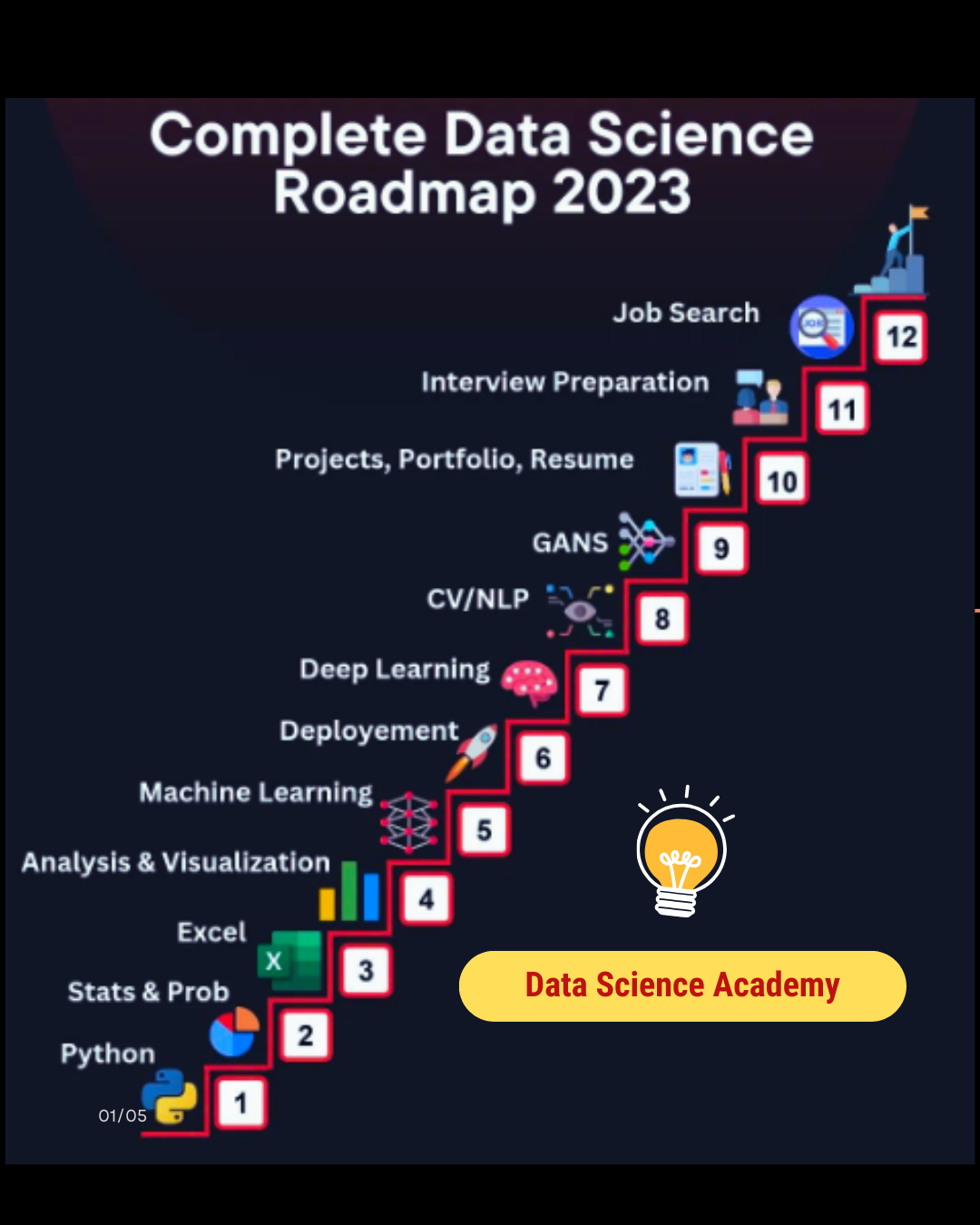
Data science is a multidisciplinary field that demands a range of skills and tools. While specific skills may vary based on the domain and role, there are fundamental skills that aspiring data scientists should master:
Mathematics:
Basic mathematics forms the theoretical foundation of data science. Key mathematical subfields include calculus and linear algebra. These concepts are vital for understanding complex machine learning and deep learning principles, as well as for developing a strong analytical mindset.
Calculus: Used extensively in optimizing machine learning models, calculus focuses on the rate of change of quantities, lengths, areas, and volumes of objects.
Linear Algebra: Essential for transforming and manipulating data effectively, linear algebra explains linear equations and their representation through matrices.
Probability:
Probability theory deals with the analysis of random phenomena. It serves as the mathematical basis for statistical inference, a critical component of data science. Important probability concepts include independent and dependent events, counting theorems, discrete and continuous random variables, Bayesian inference, and limit theorems.
Statistics:
Statistics involves the collection, organization, analysis, interpretation, and presentation of numerical data. It plays a central role in data exploration, analysis, and designing statistical tests. Aspiring data scientists should understand statistics to effectively work with data.
Programming:
Programming skills are indispensable for data scientists. Python and SQL are two of the most important programming languages in the field.
Python: Widely used in data science, Python is known for its ease of learning, strong community support, and extensive libraries for various data-related tasks. Aspiring data scientists should become proficient in Python, including constructing conditional statements, working with loops, understanding data structures, utilizing DataFrames, and implementing object-oriented programming.
SQL (Structured Query Language): SQL is crucial for interacting with databases and extracting data. Proficiency in SQL includes understanding SELECT and WHERE statements, aggregation functions like COUNT and SUM, JOIN operations, UNION, DISTINCT, and sub-queries.
Machine Learning:
Machine learning combines mathematics and computer science to analyze large datasets, recognize patterns, and make predictions without human intervention. Aspiring data scientists should have a solid understanding of both supervised and unsupervised learning.
- Supervised Learning: This type of machine learning involves training models with labeled data to make predictions. Key supervised algorithms include K-Nearest Neighbors, linear regression, logistic regression, Support Vector Machines (SVMs), decision trees, and random forests.
- Unsupervised Learning: In unsupervised learning, models work with unlabeled data to identify patterns and structures. Important unsupervised algorithms include K-means clustering, DBSCAN, PCA (Principal Component Analysis), and t-SNE (t-distributed stochastic neighbor embedding).
- Deep Learning (Optional):
Deep learning leverages computational power to apply mathematical equations to large datasets, facilitating pattern recognition and automation. Aspiring data scientists can explore deep learning for computer vision and natural language processing applications.
Additional Programming Skills and Libraries
Aspiring data scientists should also become familiar with essential libraries and tools used in data science, such as NumPy, pandas, scikit-learn, Keras, TensorFlow, seaborn, matplotlib, and Flask.

Developing Soft Skills for Data Science Success
In addition to technical skills, soft skills are indispensable for data scientists. These skills enable effective communication, critical thinking, and collaboration with diverse teams. Soft skills that aspiring data scientists should cultivate include:
- Communication Skills: Data scientists need to convey complex technical concepts to non-technical stakeholders clearly. Effective communication facilitates collaboration and ensures that data-driven insights are actionable.
- Critical Thinking: Data scientists must critically analyze problems, evaluate solutions, and make informed decisions based on data. Critical thinking skills are essential for identifying meaningful patterns and drawing relevant conclusions.
- Business Acumen: Understanding the business context and goals is crucial for data scientists. It enables them to align data-driven insights with organizational objectives and contribute to strategic decision-making.
- Storytelling: Data scientists should be proficient storytellers who can present data-driven narratives that resonate with their audience. Storytelling skills enhance the impact of data-driven insights.
- Team Player: Data science projects often involve collaboration with cross-functional teams. Being a team player fosters productive teamwork and synergy in data science initiatives.
Putting Your Work into Production
One often overlooked aspect of data science is putting work into production. Deploying machine learning models as web services using frameworks like Flask and hosting them on cloud platforms like AWS is a crucial step in applying data science in real-world scenarios. Additionally, building dashboards for reporting results is essential. Tableau and Power BI are valuable tools for creating interactive and visually appealing dashboards that communicate findings effectively.
Gathering Domain Knowledge
Domain knowledge is invaluable in data science. Understanding the industry or field in which one works is essential for selecting appropriate methods and techniques, evaluating performance, and effectively applying data science solutions. Aspiring data scientists should immerse themselves in their chosen domain, grasp its principles, focus on its business aspects, and enhance data science skills relevant to that domain.
Showcasing Your Skills
Building a skill-oriented portfolio is a pivotal step in transitioning to a data science career. The competitive nature of the field requires individuals to stand out, especially if they lack prior experience. A strategic approach is to apply newly acquired skills to real-world projects and incorporate them into a data science portfolio. Selecting relevant skills and highlighting them in line with career goals and the chosen domain is essential. Building an impressive portfolio is critical to securing a data science job.

The Power of Networking
Networking plays a vital role in landing a data science job. Given the competitiveness of data science roles, it’s challenging to pass application screenings solely through traditional methods. Networking, particularly through internal referrals, can streamline the hiring process and provide valuable feedback. Building a professional network can be accomplished through various avenues:
Meetups and Conferences:
Attending meetups and conferences related to data science is an effective way to establish a strong network. When choosing events, consider those hosted by companies of interest, those relevant to your domain, and technical conferences of moderate size. Active participation, asking questions, giving tech talks, and connecting with attendees on LinkedIn can help build a robust network.
Social Media:
Social media platforms like LinkedIn and Twitter are valuable for expanding one’s professional network. Connect with data scientists working in intriguing companies, engage with their content, share your work, and maintain a strong online presence. Effective online networking can lead to one-on-one communication and open doors to internal referrals.
Frequently Asked Questions
- Can I transition to data science without a computer science degree?
Yes, transitioning to data science is possible even without a computer science degree. Many individuals have successfully made this transition. The key to a successful career switch is structured planning, clear goals, and a well-defined learning path.
- How long does it take to transition to data science?
The duration of the transition to data science varies based on factors such as prior education, work experience, dedication, and domain knowledge. Transition periods can range from one month to a few years. Individuals with programming and statistical knowledge may complete the transition in as little as one to two months.
- Is a career in data science worth it?
Yes, a career in data science is highly rewarding. Data science offers substantial earning potential, personal development opportunities, and a chance to have a significant impact on organizations. The field continues to experience high demand for skilled professionals, ensuring job security and growth potential.
Next Steps in Transitioning to Data Science
Transitioning to data science requires persistence, consistency, and patience. Developing a habit of continuous learning is essential to stay current in this rapidly evolving field. Maintaining an updated and skill-oriented portfolio is crucial for career advancement. The 365 Data Science Program offers a range of self-paced courses led by industry experts, covering the fundamentals and advanced topics in data science. Starting with a strong foundation and building practical skills through hands-on projects is key to a successful transition into data science. To get a glimpse of our training approach, you can begin with a selection of free lessons by signing up below.
In conclusion, transitioning into data science in 2023 is a strategic move, offering numerous opportunities for career growth and personal development. By following a structured plan, mastering technical and soft skills, and actively networking, most data science aspirants can embark on a fulfilling journey into this exciting field.
To kickstart this rewarding career, most data science aspirants opt for the best data science certification course available. Yet another gentle reminder to emphasize that these comprehensive programs not only equip you with essential skills but also provide placement opportunities, making them the top choice for those looking to learn data science online. If you’re starting from scratch, consider enrolling in the best data science and machine learning course to build a strong foundation. With numerous online data science courses offering placement assistance, finding the right training institute is crucial. In just three months, you can transform your skills with the best data science courses and be on your way to a promising data science career.